
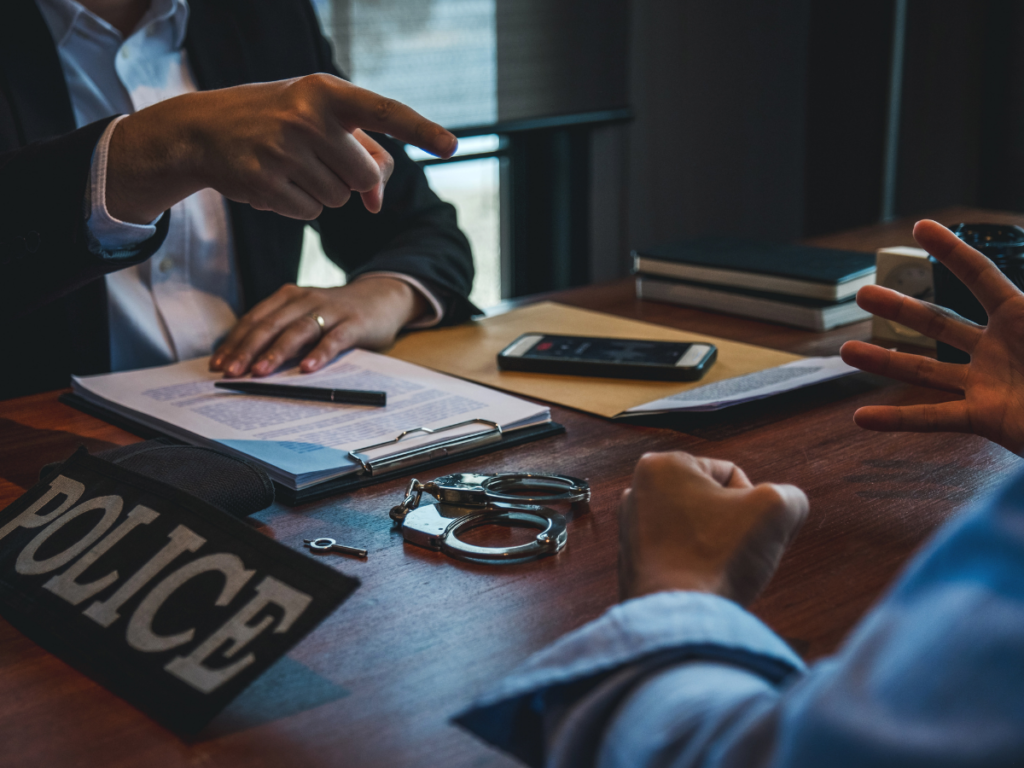
Many people mistakenly believe that cooperating fully with police officers will help clear up a misunderstanding quickly. Unfortunately, that assumption can create serious problems during a criminal investigation. If police ask you any questions about what happened, assert your Miranda rights to remain silent and ask to speak with a lawyer right away.
In South Dakota, prosecutors often rely heavily on statements made by suspects during police interviews in theft, burglary, and robbery cases. Even a short conversation can provide law enforcement with information they later use to support criminal charges. If you are facing accusations involving theft, burglary, or robbery, knowing what not to say to police could protect your future.
Steven Titus is an experienced South Dakota defense lawyer for theft crimes. At Steven Titus & Associates, P.C., we help people protect their constitutional rights during criminal investigations and criminal defense interrogation proceedings.
Why Talking to Police Without a Lawyer Is a Bad Idea
One of the most common mistakes people make is talking to the police without a lawyer because they think honesty alone will protect them. But investigators are trained to gather information that supports criminal prosecution.
When officers question someone about theft or robbery allegations, they are probably trying to establish factors such as intent, opportunity, presence at the scene, and your relationships with other suspects. They also look for inconsistencies in the suspect’s account of what happened. That’s why a statement that seems harmless to you may later be presented as evidence that you knowingly participated in criminal activity.
Things You Should NOT Say to Police
People under stress often speak impulsively. Unfortunately, there are several types of statements that can create major legal problems in defense cases involving theft charges.
- “I Can Explain Everything.” Trying to explain yourself may seem reasonable, especially if you believe the police have incorrect information. But lengthy explanations often create inconsistencies that investigators later exploit. Officers may ask the same question multiple times in different ways. Minor differences in your answers can be portrayed as dishonesty.
- “I Was Just There.” Admitting you were present at the location of an alleged theft or burglary can significantly strengthen the prosecution’s case.
- “I Borrowed It.” Theft charges frequently involve disputes over ownership or permission. Saying you “borrowed” property may unintentionally establish possession and knowledge. If the alleged victim claims no permission was granted, prosecutors may argue the statement proves unlawful control over the property.
- “I Did Not Mean To.” Statements about intent are particularly dangerous. Even partial admissions may be used to support criminal charges.
Understanding Your Miranda Rights During Police Questioning
Miranda rights are constitutional warnings that police must give to a person before conducting a custodial interrogation. These rights come from the U.S. Supreme Court case Miranda v. Arizona, and they are intended to protect a person’s Fifth Amendment right against self-incrimination.
Police typically state Miranda rights as follows: “You have the right to remain silent. Anything you say can and will be used against you in court. You have the right to an attorney. If you cannot afford an attorney, one will be appointed for you.”
What many people don’t realize is that Miranda warnings are generally required only when:
- A person is in police custody, and
- Law enforcement officers want to question them.
Police do not always have to read Miranda warnings immediately. Miranda protections generally apply when you are in police custody and when officers are conducting an interrogation. Custody usually means a reasonable person would not feel free to leave. Interrogation includes direct questioning or tactics designed to elicit incriminating responses.
If police casually question you during a voluntary encounter, Miranda warnings may not yet be required. But your statements could still be used against you. Even informal conversations can become evidence.
What’s the Difference Between Theft, Burglary, and Robbery Charges
In South Dakota, theft, burglary, and robbery are separate criminal offenses, even though they can sometimes involve similar situations.
Theft Charges
Theft generally involves taking someone else’s property without permission and with the intent to deprive them of it permanently. Theft does not require force, threats, or unlawful entry into a building.
Examples of theft may include:
- Shoplifting from a store
- Stealing a bicycle
- Taking someone’s wallet without them noticing
- Embezzling money
The severity of theft charges often depends on the value of the property involved.
Burglary Charges
Burglary charges focus on unlawful entry into a structure with the intent of committing a crime inside. A person can be charged with burglary even if nothing is actually stolen.
Under South Dakota burglary laws, SDCL 22-32, prosecutors must prove:
- Unlawful entry or remaining in a structure
- Intent to commit a crime inside
Examples of burglary may include:
- Entering a home intending to steal property
- Breaking into a business after hours
- Entering a garage intending to commit vandalism or theft
The intent element of the burglary law is one of the most important parts of the case.
Robbery Charges
Robbery is considered a violent crime because it involves taking property directly from another person using force, intimidation, or threats. Unlike burglary or theft, robbery involves confrontation with another person.
Examples of robbery may include:
- Demanding money while threatening someone
- Grabbing a purse during a physical struggle
- Taking property at gunpoint
Police Interrogation Tactics to Watch Out For
Officers are trained in psychological interrogation methods designed to encourage people to talk. Common criminal defense interrogation tactics include:
- Minimization. An officer may downplay the seriousness of allegations by saying: “This is not a big deal,” or “People make mistakes.” The goal is often to encourage admission of guilt.
- False Evidence Claims. Police may claim they have fingerprints, surveillance footage, or witness statements, even if the evidence is weak or incomplete. A suspect who believes conviction is inevitable may start talking in hopes of reducing consequences.
- Silence and Pressure. Investigators sometimes use long pauses, repeated questioning, or uncomfortable silence to pressure suspects into continuing conversations.
- Suggesting Cooperation Helps. Many people believe that cooperating automatically results in leniency. But officers generally cannot promise reduced charges or favorable treatment.
How Your Attorney Can Help
If police question you about a possible crime, don’t answer any questions. It’s best to demand to speak with your lawyer right away. Your attorney can:
- Prevent damaging statements
- Communicate with investigators on your behalf
- Evaluate police conduct during questioning
- Identify Miranda violations
- Challenge coerced or improperly obtained statements
- Review interrogation recordings
- Build strategic theft charges defense arguments
- Negotiate before formal charges escalate
Defense counsel may seek suppression of statements obtained unlawfully. For example, if police continue questioning a suspect who clearly requested an attorney, those statements may be excluded.
Speak With an Experienced Theft Crimes Defense Lawyer in South Dakota
Steven Titus & Associates, P.C., works to protect your constitutional rights and develop strategic defenses designed to get the charges against you reduced or dismissed. If you have been arrested or if the police have contacted you, assert your right to remain silent and contact our office right away!
Call (307) 257-7800 to schedule a free consultation today.
Frequently Asked Questions About Talking to Police When Facing Theft, Robbery, or Burglary Charges in South Dakota
Should I talk to the police without an attorney’s representation if I know I am innocent?
No. Even innocent people can make statements that investigators misunderstand or misinterpret. Small inconsistencies, inaccurate timelines, or partial admissions may later be used to strengthen the prosecution’s case.
Can my statements be used against me if I was not arrested?
Yes. Police and prosecutors often use statements made during voluntary conversations or informal questioning, even if you were never handcuffed or formally arrested. Many people mistakenly believe their Miranda rights apply anytime officers ask questions, but that is not always the case.
What should I say if the police want to question me about theft or burglary allegations?
You should calmly and respectfully state that you are exercising your right to remain silent and that you want an attorney present. You may say:
- “I want a lawyer.”
- “I am invoking my right to remain silent.”
- “I will not answer questions without my attorney.”
Can police lie during a criminal defense interrogation?
In many situations, yes. Officers may claim they have evidence, witnesses, or surveillance footage to encourage someone to talk.